
The Skull Base Surgery Center of Excellence at ATLAS Institute of Brain and Spine unites world-class expertise in neurosurgery and rhinology (Head and Neck Surgery) to deliver exceptional outcomes for patients with the most complex skull base conditions. This multidisciplinary program brings together Dr. Aaron Cohen-Gadol, a globally recognized neurosurgeon who has performed more than 7,500 complex brain surgeries, and Dr. Michael Ghiam, a board-certified otolaryngologist with specialized fellowship training in rhinology and skull base surgery from Cornell Medical Center and Columbia University Medical Center at New York Presbyterian Hospital.
Patients from across the United States and around the world seek care at this center because of its unique collaborative approach – combining advanced minimally invasive endonasal techniques with meticulous microsurgical precision. This partnership enables the safe removal of tumors and treatment of conditions that many other centers consider inoperable, while minimizing recovery time and preserving critical neurological function.
Dr. Cohen gave me my life back. It’s cliché, but the truest explanation of the amazing work he and his entire team did for me. He performed a very challenging resection of a tumor through my nose where other surgeons all over the US recommended a major risky craniotomy to open my skull. I have had zero symptoms since surgery and recovered very quickly! Without a scar! I am convinced Dr. Cohen is the best of the best, and feel so grateful and lucky to have been and continue to be able to call him my doctor.

Advanced Technology for Safer, More Precise Surgery
At the ATLAS Institute of Brain & Spine, we use one of the most advanced surgical simulation platforms available today – our proprietary ATLAS Simulation technology – to create a highly realistic, patient-specific ‘virtual twin’ of your brain. This allows our surgeons to carefully rehearse the entire procedure ahead of time, exploring the safest and most effective paths to reach and remove the tumor, especially when it’s in a challenging or delicate location.
Think of it like how fighter pilots use detailed simulators to prepare for high-stakes missions: they practice every maneuver in a risk-free environment so the real flight goes as smoothly and safely as possible. Here, we do the same for your surgery – reviewing your unique anatomy, testing approaches, and refining the plan to maximize tumor removal while protecting healthy brain tissue and critical functions like speech, movement, or vision.
What Is Skull Base Surgery?
Skull base surgery addresses tumors and conditions affecting the complex anatomical region where the brain rests on the bony structures at the bottom of the skull. This area contains critical nerves, blood vessels, and structures connecting the brain to the eyes, sinuses, and spinal cord. Tumors and other pathologies in this region require exceptional surgical precision because even millimeters of error can affect vision, hormonal function, facial movement, or cognitive abilities.
The skull base can be divided into three main compartments – the anterior, middle, and posterior skull base – each presenting unique surgical challenges. Traditional approaches often required large incisions and significant bone removal, resulting in extended hospital stays and prolonged recovery. The minimally invasive endonasal approach revolutionized this field by allowing surgeons to access many skull base tumors through the natural corridor of the nose, eliminating external incisions entirely.
Dr. Cohen-Gadol and Dr. Ghiam work in tandem during these procedures, with Dr. Ghiam creating the surgical corridor through the nasal passages and sinuses while Dr. Cohen-Gadol performs the intricate tumor removal and reconstruction. This dual-surgeon approach maximizes safety and surgical efficiency while ensuring each aspect of the procedure is performed by a specialist with focused expertise.

Conditions Treated at the Skull Base Surgery Center of Excellence
The center specializes in the surgical treatment of complex skull base pathologies that demand the highest level of expertise and advanced technology.
Pituitary Tumors
The most common tumors treated through the endonasal approach, pituitary adenomas can cause hormonal imbalances, vision loss, and headaches. The minimally invasive transsphenoidal approach allows for tumor removal through the nose without external incisions, typically resulting in shorter hospital stays and faster return to normal activities.
Craniopharyngiomas
These benign but challenging tumors develop near the pituitary gland and hypothalamus, often affecting hormonal function and vision. The endoscopic endonasal approach has emerged as the ideal surgical route for many craniopharyngiomas, maximizing tumor removal while protecting surrounding structures.
Chordomas and Chondrosarcomas
These rare, locally aggressive tumors arise from the bones of the skull base and require meticulous surgical planning. Complete or near-complete removal is essential for long-term tumor control, and the center’s advanced imaging and 3D surgical simulation platform enables precise preoperative planning.
Cerebrospinal Fluid Leaks
CSF leaks occur when the protective fluid surrounding the brain escapes through a defect in the skull base. The center employs sophisticated reconstruction techniques, including nasoseptal flap repairs, to achieve durable closure and prevent complications such as meningitis.
Skull Base Meningiomas
Meningiomas located along the anterior skull base, including olfactory groove and tuberculum sellae meningiomas, can often be approached through minimally invasive corridors, reducing surgical morbidity compared to traditional craniotomy approaches.

Minimally Invasive Endonasal Surgery – A Revolutionary Approach
Endoscopic endonasal surgery represents one of the most significant advances in skull base treatment over the past two decades. By accessing tumors through the natural corridor of the nose, surgeons can reach the central skull base without making external incisions or removing significant portions of bone.
The advantages of this approach include no visible scars, reduced risk of infection, shorter hospital stays, decreased postoperative pain, and faster return to normal activities. High-definition endoscopes provide magnified visualization that often exceeds what is possible with traditional microscope-based surgery, allowing the surgical team to identify and preserve critical structures with exceptional precision.
Dr. Ghiam’s specialized rhinology training is essential to the success of these procedures. His expertise in navigating the complex anatomy of the sinuses and anterior skull base, combined with Dr. Cohen-Gadol’s extensive experience in tumor resection and reconstruction, creates a team uniquely qualified to manage even the most challenging cases. This collaborative model ensures that every patient benefits from the focused expertise of two highly trained specialists working together seamlessly.
Our Multidisciplinary Surgical Team
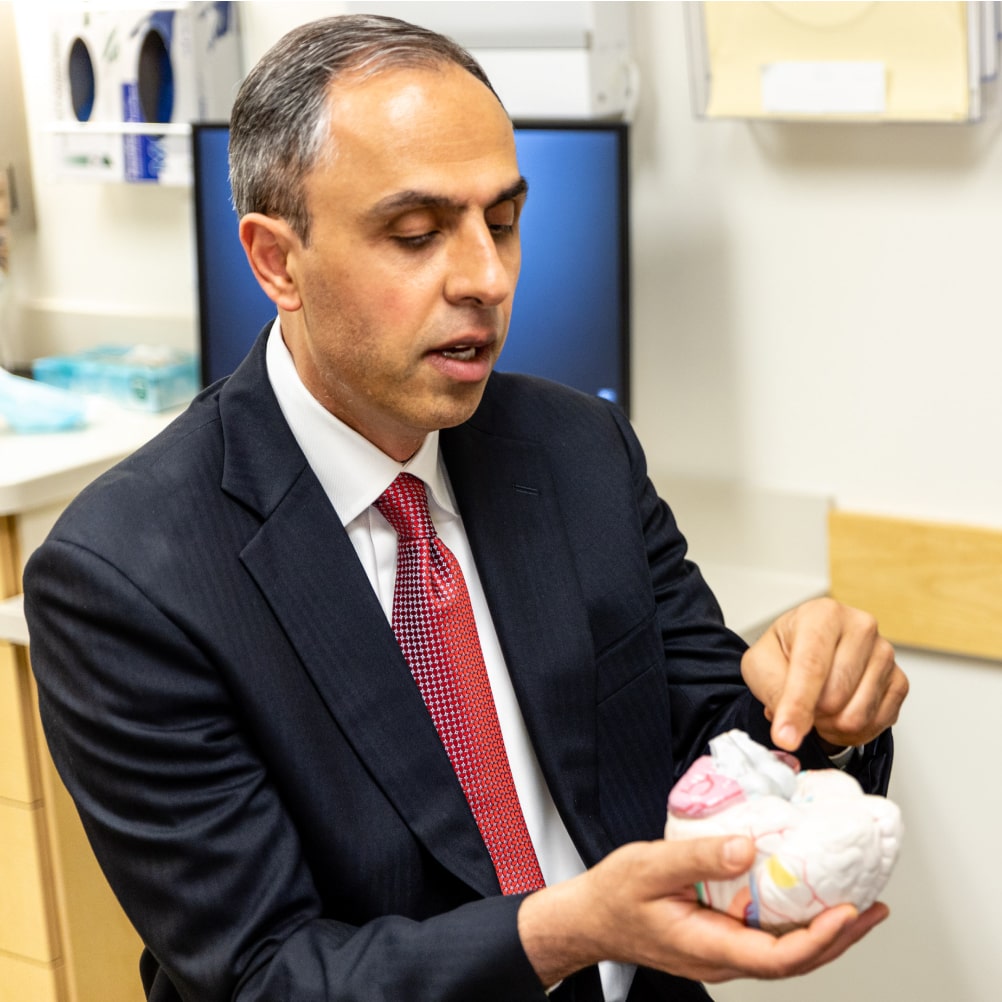
Aaron Cohen-Gadol, MD – Dr. Cohen-Gadol is the founder and president of ATLAS Institute of Brain and Spine. With more than 7,500 complex brain surgeries performed throughout his career, he is recognized internationally as a leader in complex skull base and vascular neurosurgery. He is the founder and Chief Editor of The Neurosurgical ATLAS, the world’s most prestigious neurosurgical innovation and education resource used by over 70,000 physicians globally. Dr. Cohen-Gadol has pioneered over 40 minimally invasive surgical techniques and has published more than 600 peer-reviewed publications in respected neurosurgical journals. His dedication to surgical excellence earned him the Vilhelm Magnus Medal, often referred to as the “Nobel Prize of Neurosurgery” and awarded to only 13 individuals in history.

Michael Ghiam, MD – Dr. Ghiam is a board-certified otolaryngologist and head and neck surgeon with specialized fellowship training in rhinology and skull base surgery. His rigorous academic path began at Vanderbilt University, where he completed his medical training on a prestigious scholarship. He then undertook residency in Otolaryngology and Head and Neck Surgery at the University of Miami and Jackson Memorial Hospital before completing a distinguished fellowship in Rhinology and Skull Base Surgery at Cornell Medical Center and Columbia University Medical Center at New York Presbyterian Hospital. Dr. Ghiam holds affiliations with the American Board of Otolaryngology and Head and Neck Surgery, the American Rhinologic Society, the Triological Society, and the North American Skull Base Society. His expertise in endoscopic approaches to the sinuses and anterior skull base makes him an essential partner in achieving optimal surgical outcomes.
What to Expect During Your Treatment Journey
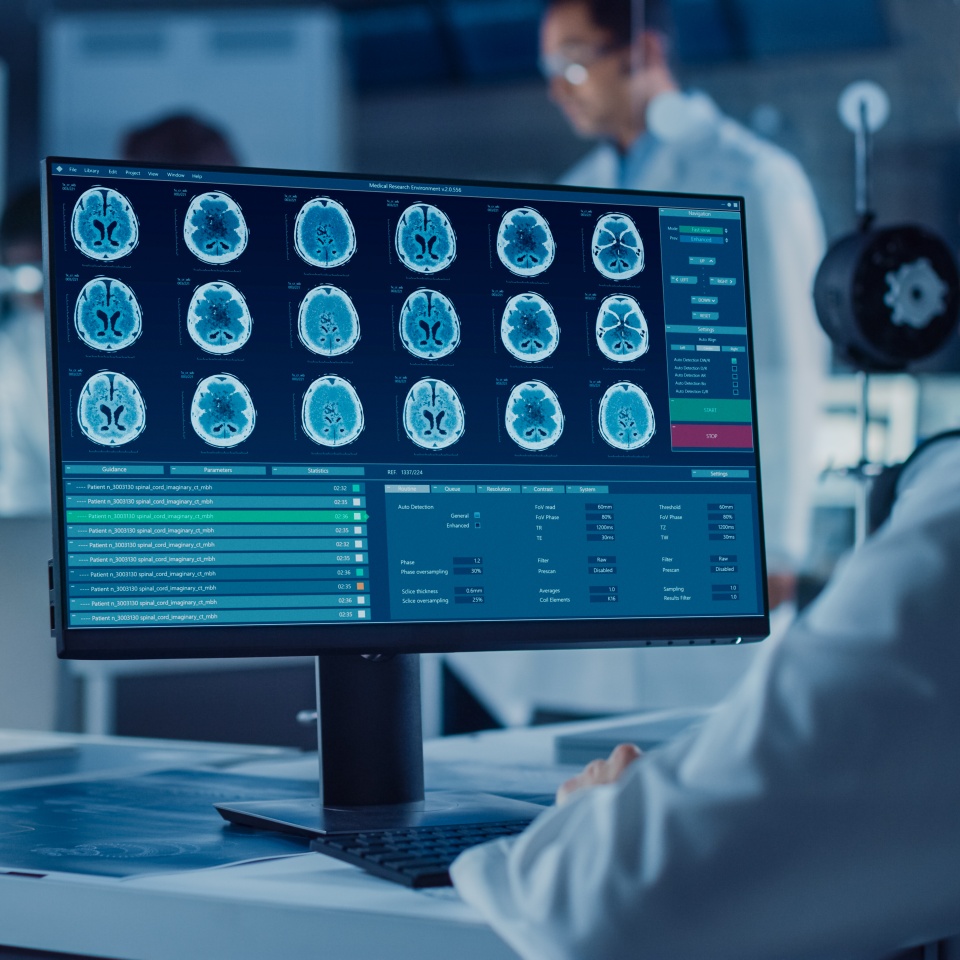
Consultation and Imaging Review: Patients undergo comprehensive evaluation including high-resolution MRI and CT scans to characterize the tumor’s size, location, and relationship to surrounding structures. During the consultation, Drs. Cohen-Gadol and Ghiam review imaging together with the patient, explain treatment options, and develop a personalized surgical plan.
Preoperative Planning with 3D Simulation: Before surgery, Dr. Cohen-Gadol uses the 3D simulation platform to map the ideal route to the tumor and practice the entire procedure. This level of preparation reduces intraoperative surprises and enhances surgical precision.
Surgery and Immediate Recovery: Most endonasal procedures are performed with the patient under general anesthesia. Depending on tumor complexity, surgery may last several hours. Patients typically remain in the hospital for one to three days following surgery, with nasal packing removed within the first few postoperative days.
Long-Term Follow-Up: Routine imaging and clinical evaluations ensure patients remain stable and functional. The center provides lifelong follow-up when needed, coordinating care with endocrinologists, ophthalmologists, and other specialists as required.
Frequently Asked Questions About Skull Base Surgery
-
The combination of Dr. Cohen-Gadol’s extraordinary surgical volume and Dr. Ghiam’s specialized rhinology expertise creates a uniquely qualified team for minimally invasive skull base surgery. The use of proprietary 3D simulation technology, advanced intraoperative navigation, and a true dual-surgeon approach distinguishes this center from standard neurosurgical practices.
-
Not all tumors can be approached through the nose. The surgical team carefully evaluates each case to determine whether an endonasal approach, a traditional craniotomy, or a combined approach offers the best chance for complete tumor removal with minimal risk. Tumor location, size, and involvement of surrounding structures all influence this decision.
-
Most patients return home within one to three days after surgery and can resume light activities within one to two weeks. Complete recovery timelines vary based on tumor complexity and individual factors, but patients generally experience significantly shorter recovery compared to traditional open approaches.
-
No. Because the entire surgery is performed through the natural corridor of the nose, there are no external incisions and no visible scars.
-
Yes. Dr. Cohen-Gadol frequently evaluates and successfully treats patients whose conditions were deemed too complex or risky by other neurosurgeons. The center’s advanced technology, meticulous planning, and combined expertise often allow for safe surgical intervention in cases where others have hesitated.
-
Yes. ATLAS Institute has a dedicated team for traveling patients who coordinates consultations, imaging, and postoperative care. Patients travel from across the United States and around the world to receive care from this specialized team.
Why Choose the Skull Base Surgery Center of Excellence
The Skull Base Surgery Center of Excellence at ATLAS Institute offers patients an unparalleled combination of surgical expertise, advanced technology, and compassionate care. With Dr. Cohen-Gadol’s record of more than 7,500 complex brain surgeries and Dr. Ghiam’s specialized rhinology fellowship training, patients receive care from a team whose combined experience and focused collaboration produces exceptional outcomes.
The center’s commitment to minimally invasive techniques means faster recoveries, reduced complications, and better preservation of neurological function. Access to proprietary 3D surgical simulation, high-definition endoscopy, and intraoperative navigation ensures every procedure is planned and executed with the highest level of precision available in modern neurosurgery.
Schedule Your Consultation in Los Angeles
Patients seeking the highest level of expertise in skull base surgery can contact ATLAS Institute of Brain and Spine to schedule a comprehensive evaluation with Drs. Cohen-Gadol and Ghiam. Whether you are facing a newly diagnosed skull base tumor, a recurrent condition, or a cerebrospinal fluid leak, the Skull Base Surgery Center of Excellence in Los Angeles provides the advanced care and compassionate support you deserve.
Medically reviewed by Aaron A. Cohen-Gadol, MD, MSc, MBA on